Improper Asbestos Removal: Risks, Laws and Compliance
Improper asbestos removal is the unsafe handling, disturbance or disposal of asbestos-containing materials (ACMs) without the appropriate survey, controls, training, licensing or documentation in place.
When asbestos is disturbed, hazardous fibres can be released into the air, putting workers, building occupants and the public at risk. It can also leave duty holders, contractors and property owners facing serious legal and financial consequences.
Because of these risks, safety, compliance and competent removal should be built into any project from the outset whenever asbestos is known or suspected to be present.
In this guide, we explore the risks of getting it wrong, the asbestos regulations that apply in the UK, and the practical steps that help keep demolition and refurbishment projects safe and compliant.
Key Risks and Consequences of Improper Asbestos Removal
The effects of improper asbestos removal often extend far beyond the immediate work area. Once asbestos-containing materials are disturbed, fibres can spread through dust, debris, clothing, tools and ventilation systems.
The main risks include:
- Exposure to airborne asbestos fibres
- Long-term health conditions, including mesothelioma, asbestos-related lung cancer and asbestosis
- Contamination of buildings, work areas and surrounding environments
- Project delays while emergency controls, testing and remediation are arranged
- Enforcement action from the Health and Safety Executive (HSE) or local authority
- Prosecution, financial penalties and reputational damage
- Increased remediation costs compared with properly planned asbestos management
For contractors, landlords, developers and property managers, asbestos compliance is more than a legal requirement. It is a practical responsibility that helps protect people, project timelines and budgets.
Protect your people, property and project with expert asbestos removal and demolition services from Howard Stott.
What Counts as Improper Asbestos Removal?
Improper asbestos removal occurs when asbestos is handled without the correct controls or when risks have not been properly assessed before work begins.
Common examples include:
- Starting work without an appropriate asbestos survey or risk assessment
- Disturbing suspected asbestos-containing materials during refurbishment, maintenance or demolition
- Using workers who do not have suitable asbestos training
- Carrying out licensable asbestos work without an HSE licence
- Failing to notify licensable work where notification is required
- Removing asbestos without suitable containment, personal protective equipment (PPE) or respiratory protective equipment (RPE)
- Breaking, drilling, sanding or dry sweeping asbestos-containing materials
- Disposing of asbestos waste with general construction waste
- Reoccupying an area before any required cleaning, testing or clearance procedures have been completed
In many cases, the problem starts before removal work even begins. When asbestos is not identified and managed early, unnecessary risks can quickly affect the entire project.
Why Asbestos Is Hazardous When Disturbed
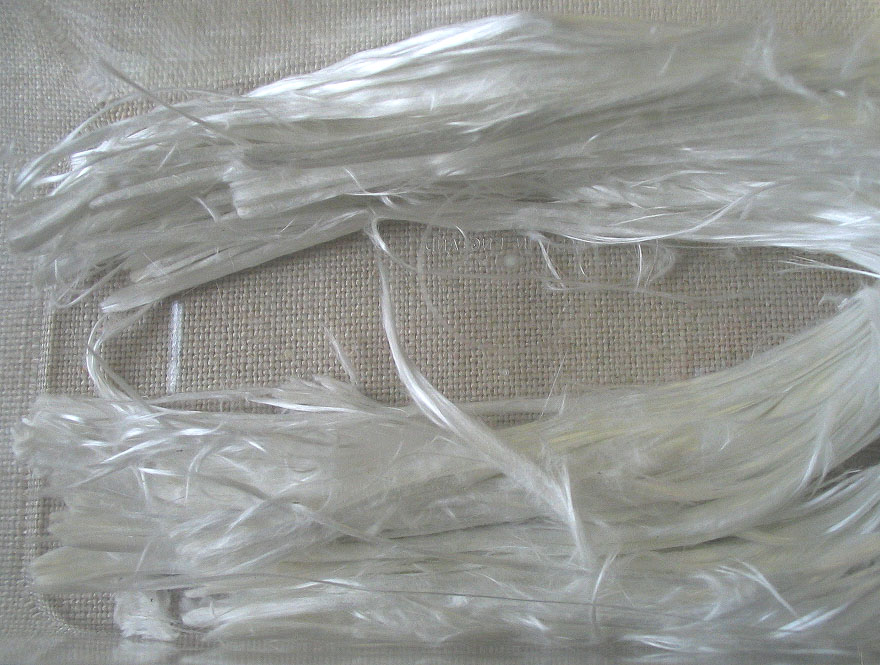
Asbestos was widely used in UK buildings until its use was gradually restricted and eventually banned in 1999. It can still be found in many older commercial, industrial and residential properties, particularly in insulation, asbestos insulating board (AIB), pipe lagging, cement products, textured coatings, floor tiles and roofing materials.
The danger arises when asbestos is disturbed. Activities such as cutting, breaking, scraping or removing asbestos-containing materials can release microscopic fibres into the air. Once inhaled, those fibres can remain in the lungs for decades.
According to the HSE, asbestos-related diseases cause around 5,000 deaths each year in Great Britain. As symptoms often take many years to appear, asbestos removal guidelines and control measures must always be followed carefully, even when materials appear to be in good condition.
Related Read:
UK Asbestos Removal Laws and Legal Responsibilities
The main legislation covering asbestos management and removal in the UK is the Control of Asbestos Regulations 2012. These regulations place responsibilities on employers, building owners, occupiers, contractors and anyone responsible for maintenance or repair work.
For non-domestic premises, the duty to manage asbestos requires the responsible person to:
- Take reasonable steps to determine whether asbestos is present
- Assess the condition of any asbestos-containing materials
- Maintain up-to-date records
- Assess and manage the risk
- Provide relevant information to anyone who may disturb asbestos during their work
These responsibilities are particularly important before demolition, refurbishment, maintenance, strip-out or structural works. Where asbestos-containing materials could be disturbed, the risks must be assessed before work begins.
Failure to comply with asbestos regulations can result in enforcement notices, prosecution, substantial fines, project delays and avoidable exposure risks.
Key Asbestos Removal Regulations in the UK
Not all asbestos work requires a licence. Some lower-risk tasks may be classed as non-licensed work or notifiable non-licensed work (NNLW), but they still require appropriate training, risk assessments and control measures. Higher-risk asbestos work must only be carried out by an HSE-licensed asbestos contractor.
Licensed work commonly includes activities involving higher-risk materials such as:
- Sprayed asbestos coatings
- Pipe lagging
- Loose-fill asbestos insulation
- Thermal insulation containing asbestos
- Certain work involving asbestos insulating board (AIB)
Where work is licensable, it will generally need to be notified to the HSE before it begins. A written plan of work, suitable control measures, trained operatives, medical surveillance and record-keeping may also be required.
The correct classification depends on the material involved, its condition, the type of work being carried out and the likely level of fibre release. Without a proper assessment, it is easy to assume a task is low risk and inadvertently fall into non-compliance.
Asbestos Removal Guidelines: What Safe Work Should Include
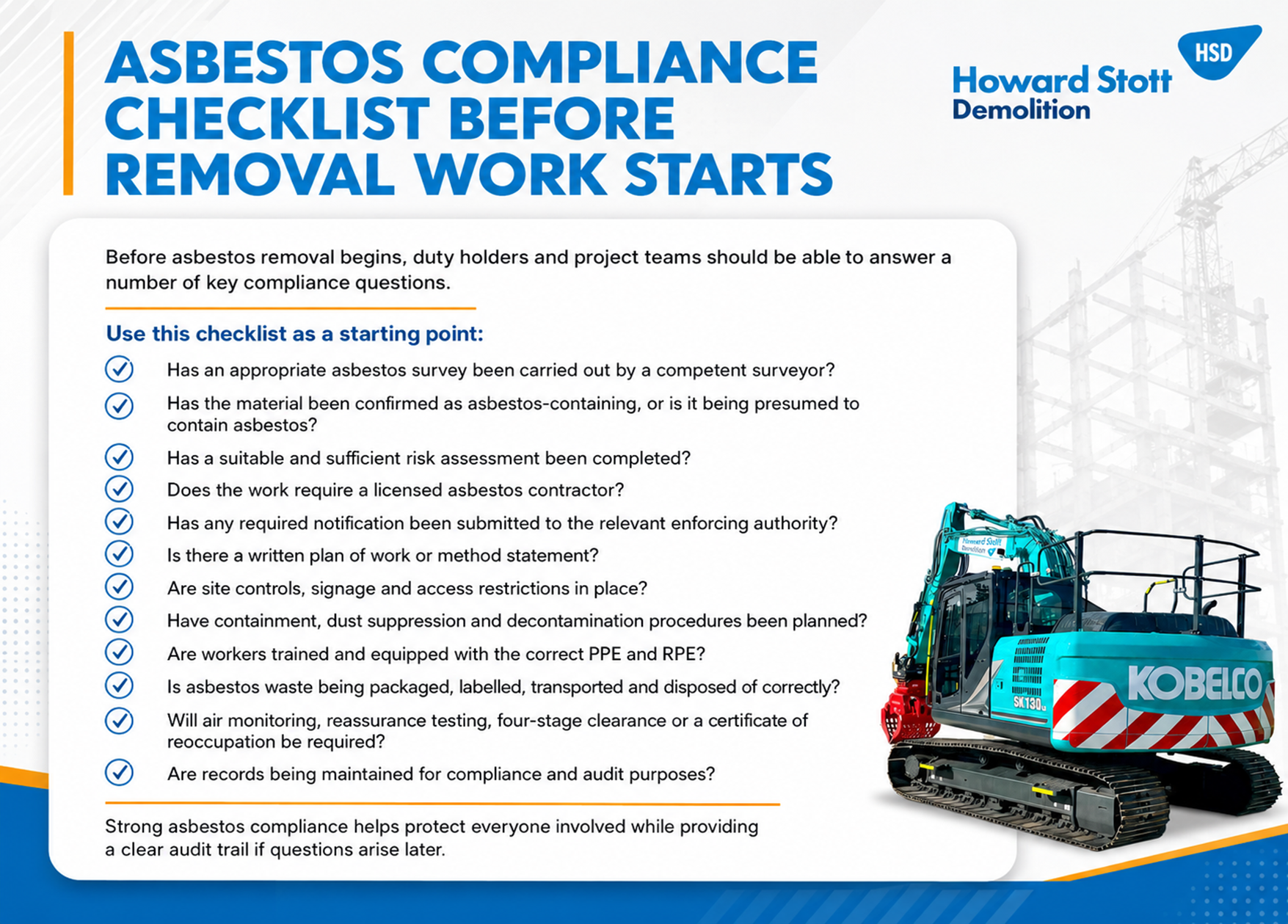
Safe asbestos work should be carefully planned, properly controlled and fully documented. Although the exact approach will vary depending on the site and material, professional asbestos removal guidelines generally include the following steps.
1. Identify the Risk
An asbestos survey should establish the location, type and condition of any asbestos-containing materials. If materials cannot be confirmed, they should be treated as asbestos-containing until proven otherwise.
2. Plan the Work
A risk assessment and written plan of work should set out how the asbestos will be managed or removed. This should cover sequencing, access arrangements, containment, emergency procedures, decontamination processes, waste routes and handover requirements.
3. Control the Work Area
The work area should be secured to prevent unauthorised access. Depending on the material and task, this may involve warning signage, barriers, enclosures, negative pressure units and other containment measures.
4. Prevent Fibre Release
Safe removal methods should minimise breakage and dust generation. HSE guidance recommends controls such as wet removal techniques, suitable tools, controlled handling methods and appropriate asbestos cleaning procedures.
5. Protect Workers
Workers must have the correct training, PPE and RPE for the work being carried out. Equipment should be properly selected, maintained, used correctly and face-fit tested where required.
6. Manage Waste Correctly
Asbestos waste is classified as hazardous waste. It must be securely packaged, clearly labelled, transported in line with applicable regulations and disposed of at authorised facilities. Waste documentation should also be retained.
7. Complete the Handover
Depending on the nature of the work, air monitoring, reassurance testing, four-stage clearance procedures and a certificate of reoccupation may be required before an area can be safely returned to use.
For demolition and refurbishment projects, these steps should form part of the wider project plan. Howard Stott’s professional asbestos removal services support safe identification, controlled removal, compliant disposal and clear documentation from start to finish.
What to Do If Asbestos Is Accidentally Disturbed
Safe asbestos work should be carefully planned, properly controlled and fully documented. Although the exact approach will vary depending on the site and material, professional asbestos removal guidelines generally include the following steps.
If suspected asbestos is discovered or accidentally disturbed during work, the priority is to prevent further exposure.
The safest immediate actions are:
- Stop work immediately
- Keep people away from the affected area
- Avoid sweeping, vacuuming or further disturbing the material
- Prevent dust from spreading on clothing, tools or footwear
- Isolate or cordon off the area where possible
- Inform the site manager, duty holder or responsible person
- Seek competent asbestos advice before work resumes
- Record the incident and follow any reporting requirements that apply
Do not attempt to clean up suspected asbestos contamination without the appropriate controls in place. Uncontrolled clean-up can spread fibres further and increase remediation costs.
Where the issue arises during a demolition or refurbishment project, specialist demolition consulting support can help clarify responsibilities, risks and the safest way forward.
Warning Signs of Unsafe or Illegal Asbestos Removal
Property owners, neighbours, site teams and building users should take concerns seriously if asbestos work appears to be uncontrolled.
Warning signs may include:
- No asbestos survey or supporting documentation available
- No exclusion zone, barriers or warning signage
- Visible dust escaping from the work area
- Workers handling suspected asbestos without suitable PPE or RPE
- Materials being broken, thrown or dry swept
- Waste being placed in general skips
- Unlabelled asbestos waste bags or debris left on site
- Work continues after suspected asbestos has been identified
If unsafe asbestos work creates a risk to workers or the public, concerns should be raised with the responsible contractor, site manager, duty holder or relevant enforcing authority.
Why Professional Asbestos Removal Protects People, Projects and Programmes
Professional asbestos removal is about managing risk properly so that projects remain safe, compliant and on programme.
A competent asbestos removal team can assist with:
- Survey coordination and early risk planning
- Risk assessments and method statements
- Safe site set-up and controlled access
- Enclosures and containment systems where required
- Air monitoring coordination with UKAS-accredited analysts
- Hazardous waste handling and documentation
- Safe and compliant project handover
This becomes especially important on demolition and refurbishment projects, where asbestos risks often sit alongside structural hazards, live services, restricted access and programme pressures.

Howard Stott Demolition delivers safe demolition services with asbestos management, waste planning and environmental responsibility built into the process. Where asbestos waste is involved, our demolition waste management support helps ensure disposal routes remain documented, compliant and controlled.
Final Thoughts: Cutting Corners Is Never Worth the Risk
Improper asbestos removal can expose people to serious long-term health risks, contaminate buildings and sites, and lead to significant legal and financial consequences. Even small mistakes can have lasting effects if asbestos fibres are released and not properly controlled.
The safest approach is to identify asbestos early, follow applicable asbestos regulations, use competent professionals and maintain clear compliance records throughout the project.
If you are planning demolition, refurbishment or strip-out work and asbestos is known or suspected, speak to Howard Stott Demolition before work begins. Our team can help you plan a safer, cleaner and fully compliant route forward.
Related News & Projects